Workshop · Breathwork · Sound Bath
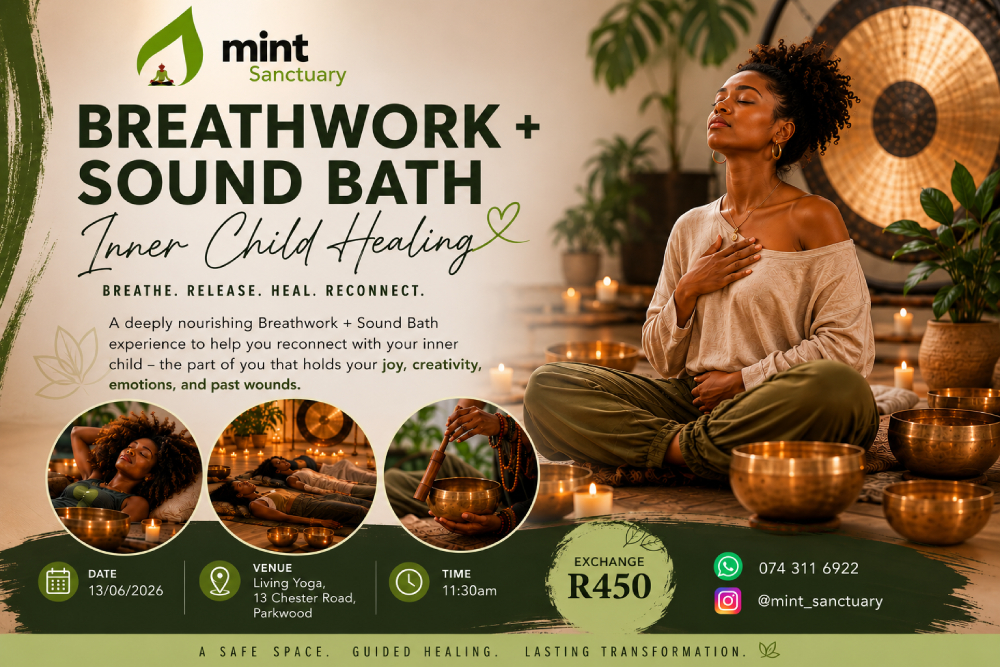
Inner Child Healing Through Breathwork & Sound Bath
🎟 Join Us for This Transformative Experience
Limited spaces available — secure your place today.
Get Your Ticket →
We all carry within us a younger version of ourselves — a child who experienced moments of joy, wonder, confusion, and pain. The inner child holds memories, beliefs, and emotional imprints that continue to shape how we feel, relate, and move through life as adults. This immersive workshop is an invitation to meet that part of yourself with compassion, curiosity, and care.
Through the combined power of breathwork and a sound bath experience, you will be gently guided into a deeply relaxed, receptive state — where the nervous system softens, the mind quiets, and the heart opens. In this space, healing becomes possible at a depth that ordinary conversation rarely reaches.
What You Will Experience
- ✓ A guided breathwork journey to access and release stored emotional patterns
- ✓ An immersive sound bath using Tibetan bowls, crystal bowls, and gongs
- ✓ Inner child visualisation and compassionate self-reconnection
- ✓ A safe, held space facilitated by certified wellness practitioners
- ✓ Post-session integration time and community sharing
Who Is This Workshop For?
This workshop is for anyone who feels called to do deeper healing work. Whether you are on an active healing journey, navigating stress and emotional overwhelm, or simply feeling disconnected from yourself — this experience is for you. No prior breathwork or meditation experience is required. All you need to bring is an open heart and a willingness to show up for yourself.
Why Breathwork for Inner Child Healing?
The body holds what the mind cannot always articulate. Breathwork bypasses the analytical mind and accesses the somatic (body-based) layer where emotional memories are stored. When we breathe intentionally and deeply, we create the physiological conditions for old patterns to surface, be witnessed, and release — allowing the nervous system to update its story and begin to heal.
Combined with sound healing — which shifts brainwave states into theta (deep intuition and emotional processing) — this workshop creates a uniquely powerful container for transformation.
Ready to Begin Your Healing Journey?
Spaces are limited. Reserve your place at the Inner Child Healing Workshop today.
🎟 Secure Your Ticket Now →
Event · Youth Day · 16 June 2026
Youth Day 2026 — Heal With Us
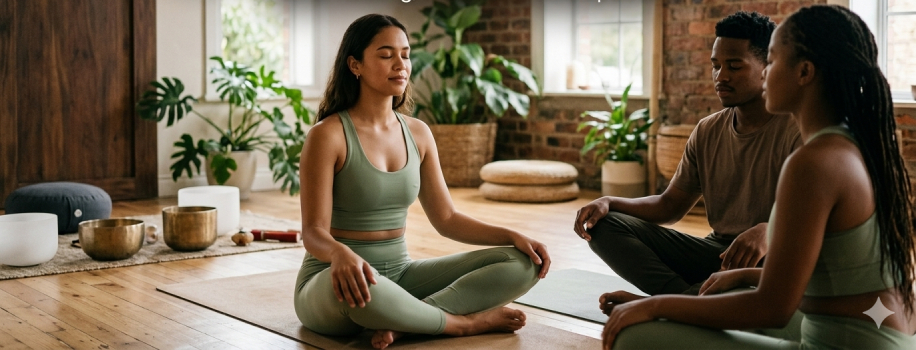
Youth Day is more than a public holiday — it is a reminder of the courage, resilience, and power that lives within the youth of South Africa. This year, Mint Sanctuary is honouring that spirit by creating a healing space where young South Africans can come together, breathe, release, and reconnect.
Healing is not a passive act. It is one of the most courageous, revolutionary things a young person can choose to do — for themselves and for the generations that will follow. We believe that a healed youth builds a healed nation.
What to Expect
- ✓ Guided breathwork session for stress release and grounding
- ✓ Sound healing experience for deep nervous system restoration
- ✓ Mindfulness and grounding practices for everyday wellbeing
- ✓ Community connection and shared healing space
- ✓ Tools to take home for your ongoing healing journey
This event is open to young people and allies of all backgrounds. Whether you are navigating anxiety, burnout, identity, grief, or simply the relentless pace of modern life — this is your space to pause, breathe, and be held.
📅 16 June 2026 — Youth Day
Details on venue, time, and registration will be shared on our Instagram @mint_sanctuary and Facebook pages. Follow us so you don't miss it.
Register Your Interest
Lifestyle · Fashion · Wellness · 2026
Durban July 2026 — Fashion, Wellness & Style Trends
The Durban July is one of South Africa's most celebrated social events — a spectacular collision of fashion, culture, and community. But as the conversation around intentional living grows louder, so does a deeper question: what does it mean to show up to a moment like this feeling truly well?
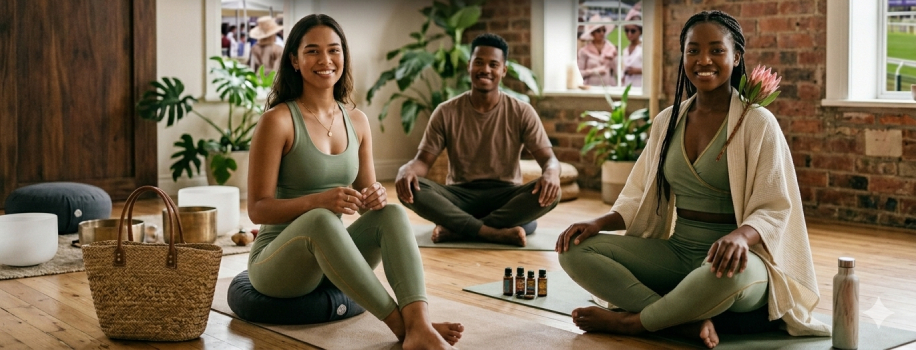
At Mint Sanctuary, we believe that style and wellness are not opposites — they are deeply connected expressions of how we carry ourselves in the world. This year's Durban July season is the perfect moment to explore that intersection: the trends redefining South African fashion, and the wellness practices that keep you glowing, grounded, and fully present for every moment of it.
The Wellness Aesthetic Is Having a Moment
Globally and locally, the most compelling style statements are increasingly rooted in wellness culture — natural fabrics, earth tones, breathable silhouettes, and an intentional ease that speaks of someone who takes care of themselves. The athleisure movement, pioneered by brands like our sister brand Mint Athleisure, captures exactly this energy: movement, beauty, and comfort living in harmony.
Arrive Well, Not Just Dressed Well
The Durban July is a high-energy, sensory-rich event — and preparing your nervous system is as important as preparing your outfit. A breathwork session in the days before the event can help you arrive grounded, present, and radiating the kind of calm confidence that no outfit can manufacture on its own.
- ✓ Pre-event breathwork to calm nerves and boost presence
- ✓ Post-event sound healing to decompress and restore
- ✓ Mindful movement and self-care rituals for the whole season
Because the most stylish thing you can walk into a room wearing is peace of mind. Follow us on @mint_sanctuary for Durban July wellness and style content throughout the season.
Book a Pre-Event Session
Breathwork · Professional Wellness
The Benefits of Breathwork for Professionals
15 November 2025 · 7 min read · Mint Sanctuary Editorial
When we discuss optimising professional performance, the conversation typically turns to productivity systems, sleep hygiene, or nutrition. Rarely do we speak about breathing — yet the way you breathe is one of the most direct levers you have over your nervous system, mood, cognitive function, and physical energy.
What is Breathwork?
Breathwork refers to intentional breathing practices that alter the rhythm, depth, and pattern of breath to produce specific physiological and psychological outcomes. Unlike passive breathing — which we do unconsciously 23,000 times per day — breathwork is active and purposeful. The results are measurable and often immediate.
5 Key Benefits for Professionals
1. Faster stress recovery. Research published in Frontiers in Human Neuroscience found that even five minutes of slow-paced breathing significantly reduced heart rate and self-reported stress. For professionals moving between high-stakes meetings, this is a tool you can deploy between presentations.
2. Improved cognitive clarity. Breathwork increases prefrontal cortex activation — the region responsible for executive decision-making, impulse control, and creative thinking. A 2023 Stanford study found that cyclic sighing produced greater improvements in positive affect and cognitive performance than mindfulness meditation.
3. Better sleep quality. Breathwork reduces time to fall asleep and increases slow-wave (deep) sleep — the most restorative phase. For executives who struggle to switch off, a ten-minute breathwork practice before bed is often more effective than sleep supplements.
4. Emotional regulation under pressure. High-intensity breathwork facilitates the release of suppressed emotions — particularly useful for leaders who absorb organisational stress without an outlet. The result is not just relief, but increased empathetic leadership capacity.
5. Reduced burnout risk. A 2024 study of 400 corporate employees found those who practised breathwork twice weekly showed significantly lower burnout scores and higher engagement ratings than controls at six-month follow-up.
Book a Breathwork Session
Sound Healing · Athletic Recovery
Sound Healing for Athlete Recovery
2 November 2025 · 6 min read · Mint Sanctuary Editorial
The best training programmes in the world account for physical load, nutrition, and sleep. The new edge? Sound. Elite sports organisations — from Premier League football clubs to Olympic gymnastics programmes — are quietly integrating sound healing into their recovery protocols.
The Physics of Healing Frequencies
Sound healing operates on the principle of resonance and entrainment. When the body is exposed to specific frequencies — particularly those produced by Tibetan singing bowls (432Hz–528Hz), crystal bowls, and gongs — the brain's electrical activity begins to synchronise with those frequencies. This is brainwave entrainment.
For athletes, this matters enormously. After intense training, the nervous system remains in a heightened sympathetic state — cortisol is elevated, HRV is suppressed, and the body struggles to enter the parasympathetic recovery mode where repair actually happens. Sound healing accelerates this transition in ways that passive rest cannot.
Measurable Athletic Benefits
Faster HRV restoration. Athletes who completed 45-minute sound healing sessions post-training showed 23% faster HRV restoration compared to passive rest groups in a 2022 study — meaning faster, more complete physiological recovery.
Reduced perceived exertion. Sound healing reduces perceived fatigue through endorphin release and neurological calming, allowing athletes to train harder over time.
Improved sleep architecture. Athletes using sound healing as a pre-sleep ritual showed increased time in slow-wave sleep — the stage where growth hormone is released and muscle repair occurs.
Schedule Athlete Recovery Session
Mental Performance · Stress Science
How Chronic Stress Silently Sabotages Your Performance
20 October 2025 · 8 min read · Mint Sanctuary Editorial
Stress is not just an emotional experience. It is a full-body biochemical event with measurable consequences for cognition, physical health, and long-term performance. Most high performers know they are stressed. Far fewer understand what chronic stress is actually doing to them.
The Cortisol Cascade
When you encounter a stressor — a deadline, a difficult conversation, a financial pressure — your hypothalamus triggers the release of cortisol and adrenaline. In short bursts, this is adaptive. The problem begins when the stress response never fully deactivates. Chronically elevated cortisol produces a cascade of consequences: impaired memory consolidation, reduced prefrontal cortex function, increased inflammatory markers, disrupted sleep, suppressed immune function, and — paradoxically — reduced motivation.
The Performance Paradox
The cruel irony of chronic stress is that it often feels like motivation. The urgency, the adrenaline, the ability to keep pushing — this feels like performance. But research consistently shows that chronic stress narrows cognitive bandwidth, reduces creative problem-solving, impairs emotional intelligence, and increases reactive decision-making.
The goal is not stress avoidance. It is stress resilience — the ability to enter the stress response when needed, and exit it completely when not. This is a physiological skill that can be trained. Breathwork and sound healing are two of the most evidence-based methods for building this capacity.
Explore Our Services
Corporate Wellness · Leadership
Why Corporate Wellness Matters More Than Ever
8 October 2025 · 6 min read · Mint Sanctuary Editorial
South African businesses lose an estimated R40 billion per year to presenteeism — employees who arrive at work but are too exhausted, anxious, or disengaged to perform effectively. The solution is not more performance management or incentive programmes. It is genuine wellbeing investment.
The Business Case Is Overwhelming
Deloitte's 2024 Global Human Capital Trends report found that companies with strong wellness programmes outperform industry peers by 21% on productivity metrics. SADAG reports that 1 in 6 South African adults experience a mental health challenge that impairs their work — that is 16% of your workforce operating below capacity right now.
Why Standard EAP Programmes Fall Short
Most companies offer an Employee Assistance Programme — a phone line and a few counselling sessions. This is crisis response, not wellness investment. EAPs treat acute distress; they do not build resilience, restore energy, or create cultures of sustainable performance. At Mint Sanctuary, we design programmes that go beyond a fruit bowl and a step challenge — creating experiences that genuinely shift how people feel and perform.
Get a Corporate Wellness Quote
Science · Breathwork Research
The Science of Breathwork: What the Research Actually Says
25 September 2025 · 9 min read · Mint Sanctuary Editorial
Breathwork has been practised for thousands of years across ancient Indian (pranayama), Tibetan, and Indigenous African traditions. Today, peer-reviewed neuroscience is catching up — and the findings validate what practitioners have long known: intentional breathing is a direct interface with the body's most fundamental regulatory systems.
The Vagus Nerve: Your Internal Wellness Highway
The vagus nerve is the longest cranial nerve in the body, connecting the brain to the heart, lungs, and gut. It is the primary highway of the parasympathetic nervous system — and its activation is directly controlled by the breath. Slow, extended exhalation stimulates vagal tone, shifting the entire system towards calm. Research from the University of Pisa demonstrated that slow breathing at 6 cycles per minute produced optimal baroreflex sensitivity and the greatest heart rate variability — markers of both cardiovascular health and stress resilience.
Key Research Findings
Stanford (2023): Cyclic sighing — double inhale followed by extended exhale — was superior to mindfulness meditation for reducing anxiety and improving positive affect in the short term.
Journal of Psychiatric Research (2022): Holotropic Breathwork significantly reduced symptoms of depression, anxiety, and PTSD — with effects comparable to SSRI medication at 8-week follow-up.
Frontiers in Psychology (2021): Athletes completing a 4-week breathwork protocol showed improved VO2 max and better cognitive performance under physical fatigue.
International Journal of Environmental Research (2024): Workplace breathwork twice weekly for 12 weeks produced significant reductions in burnout with effects maintained at 6-month follow-up.
Begin Your Breathwork Journey


